


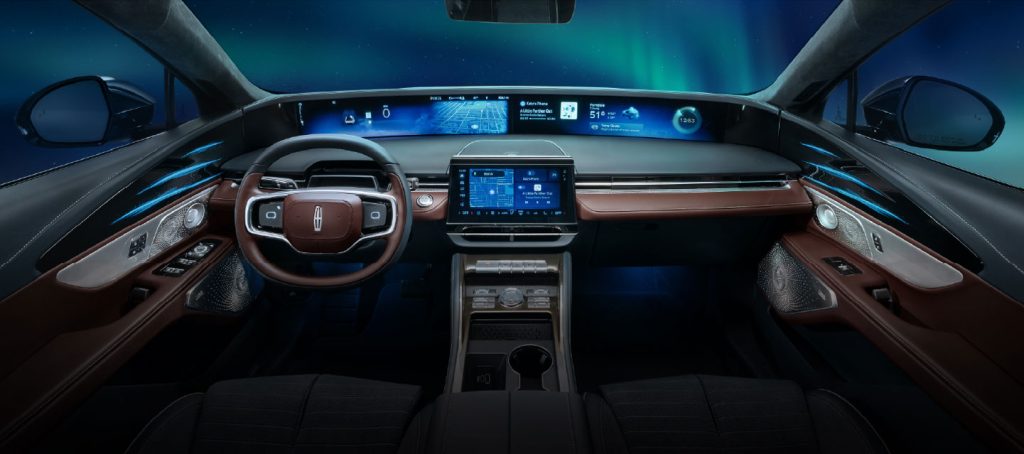
Let’s not pretend anyone wakes up excited about “driver-assist systems.” It sounds like something explained in a quiet voice at the end of a brochure. Soft. Reassuring. Slightly forgettable.
Then you sit in traffic on I-10 in Houston. Suddenly, it matters a lot.
It’s Not One Thing. It’s a Safety Net.
Lincoln Co-Pilot isn’t a single feature you switch on and marvel at for five minutes. It’s a collection of systems quietly working in the background, stepping in at the exact moment your attention drifts, your foot hesitates, or the car ahead does something unpredictable.
Think of it less like technology and more like a second set of instincts. The serene, measured kind you wish you had all the time.
The Lane-Keeping One You Forget About Until You Don’t
Lane Keeping System sounds simple. Camera sees lines. Car stays between them. In practice, it’s more subtle. You drift slightly. Not enough to panic, just enough to notice. The wheel nudges back. Not aggressively. Just enough to remind you that yes, you are still responsible for pointing this thing in the right direction.
It’s the kind of correction that feels almost human. Not intrusive. Not dramatic. Just present.
Adaptive Cruise Control: The Real Game Changer
This is the one people talk about after using it. Set your speed, pick your distance, and let the car deal with the rhythm of traffic. Accelerate. Slow. Stop. Move again. It handles the repetition, so you don’t have to. In Houston traffic, that’s not convenience. That’s survival.
What makes it work is how natural it feels. No sudden lunges. No awkward braking. Just a steady, predictable flow that removes the mental fatigue of constant adjustment.
Auto Brake: The Feature You Hope You Never Notice
Auto Brake sits quietly in the background, watching everything. A car stops too quickly ahead. A moment of distraction. A delay in reaction. The system steps in before things escalate.
You might only experience it once. Maybe never. But knowing it’s there changes how you feel behind the wheel. There’s a layer of confidence that’s hard to quantify until you need it.
Why It Works So Well in a Lincoln
Here’s the difference. A lot of brands build driver-assist systems that feel like they’re interrupting you. Lincoln builds them to feel like they’re supporting you.
Everything is tuned for smoothness. Input is softer. Responses are more measured. Nothing feels abrupt or artificial. It aligns with what a Lincoln is supposed to be: calm, controlled, and quietly capable.
What It Actually Means Day to Day
It means less tension in traffic. It means fewer small corrections over long drives. It means a car that helps carry the mental load without ever trying to take over the experience. And that’s the key. Lincoln Co-Pilot doesn’t replace the driver. It just makes being one a little easier.
Connect with us


- 2026 Lincoln Corsair
- 2026 Lincoln Nautilus
- Houston Lincoln Dealer
- Houston Lincoln Service
- Lincoln Aviator
- Lincoln Aviator® vs Mercedes-Benz GLE
- Lincoln Co-Pilot
- Lincoln Corsair
- Lincoln Features
- Lincoln inventory
- Lincoln models
- Lincoln Nautilus models
- Oil change
- Uncategorized
- West Point Lincoln Service